 SummitPlate
Best Meal Planning App for Budgeting: Plan Dinners, Control the List
Your household → seven dinners → shared ingredients → one list
Start a grocery-budget decision with the dinners you need to feed your household. SummitPlate plans seven connected dinners around household size, diet and busy-night constraints, with shared ingredients and one consolidated grocery list. That gives a budget-minded household a plan to shop from—not a promise of a particular grocery bill.
The free preview shows the shape of the week. Paid access unlocks full recipes and the complete grocery list.
Illustrative five-night excerpt
Five dinner decisions. One list to work from.
Five nights from an illustrative week: an example of ingredient reuse, not a generated plan or complete shopping list. Your meals and quantities depend on your household.
- Mon
Chicken & pepper rice bowls
Chicken · peppers · rice
- Tue
Black bean & pepper tacos
Black beans · peppers · tortillas
- Wed
Lemon chicken with broccoli
Chicken · broccoli · lemon
- Thu
Broccoli & black bean rice
Broccoli · black beans · rice
- Fri
Chicken & pepper wraps
Chicken · peppers · tortillas
Shared across the week
- Chicken
- 3 dinners
- Peppers
- 3 dinners
- Rice
- 2 dinners
- Black beans
- 2 dinners
- Broccoli
- 2 dinners
- Tortillas
- 2 dinners
The full plan brings compatible ingredient quantities together. Check your pantry before shopping and review any item marked “Check recipe.”
Start with your householdFrom the plan to your kitchen
Product screens from an example saved week, captured September 9, 2026. Meals, quantities and ingredient counts vary with your plan. These screens show the interface; review your current recipe amounts before cooking.
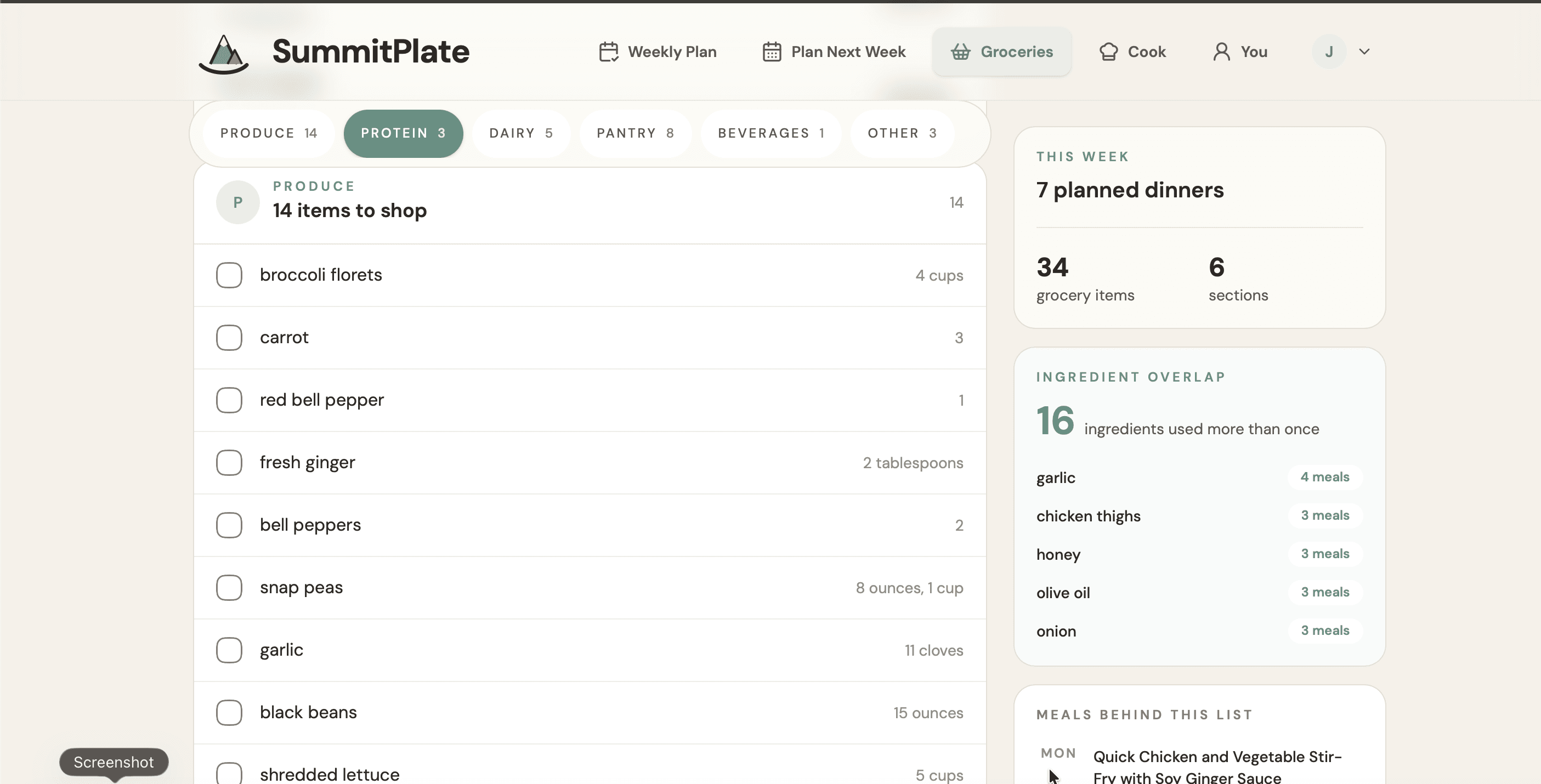
One place to check the groceries
See ingredients by category and which ones appear across multiple dinners. Review any separate units or items marked Check recipe before shopping.
View full-size image: One place to check the groceries (opens in a new tab)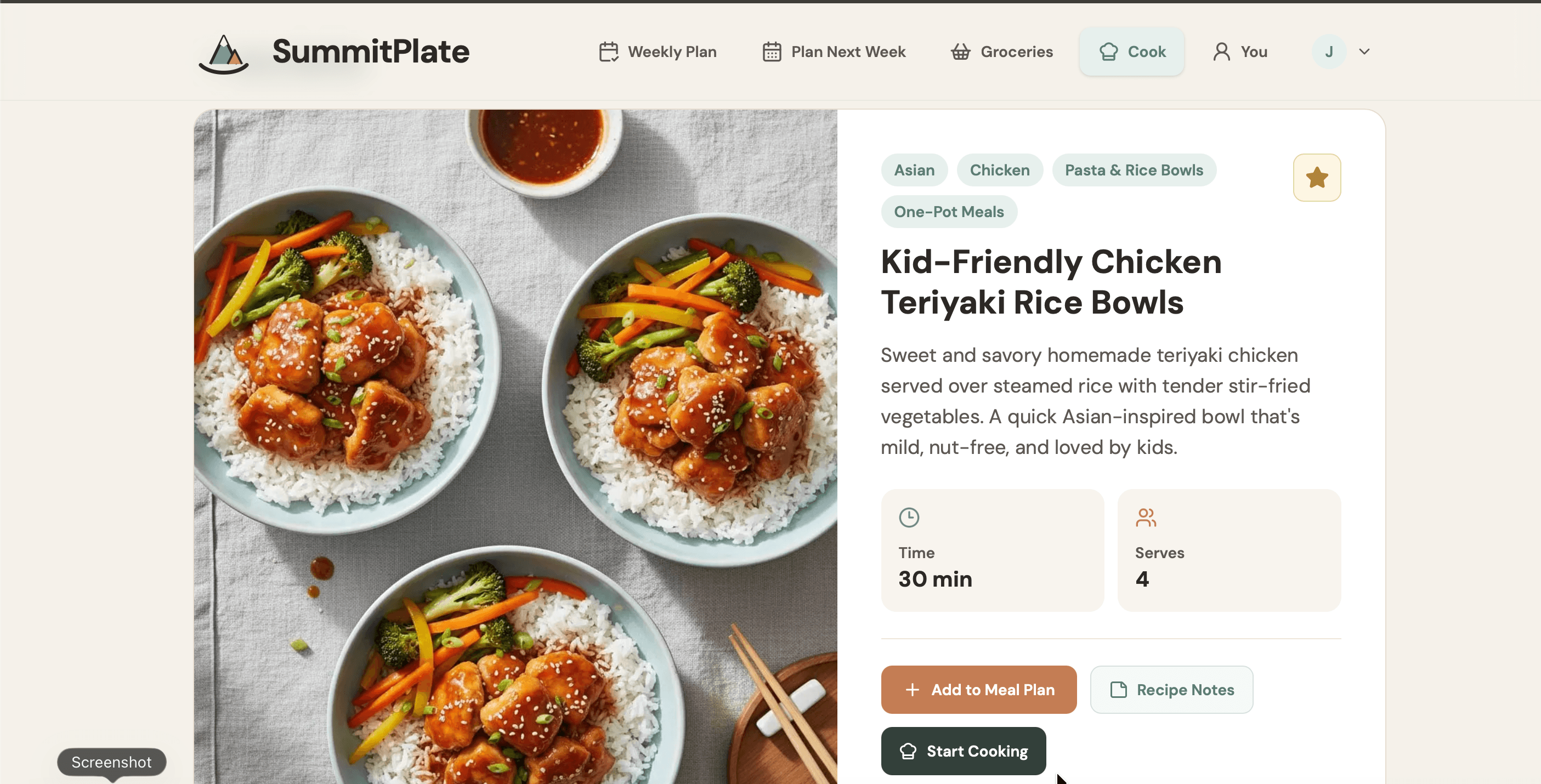
Open a dinner when it is time to cook
The recipe overview shows the dish, time and serving count. Ingredients and cooking instructions continue below the area shown here; a serving label alone does not confirm that legacy recipe amounts have been scaled.
View full-size image: Open a dinner when it is time to cook (opens in a new tab)Look for ingredient overlap before you look for savings claims
A week of unrelated recipes can give you a long list of ingredients with no connection between nights. SummitPlate plans dinners as one unit, sharing proteins, produce and staples on purpose. The full plan then becomes one list with duplicate ingredients collapsed.
Give ingredients a job across the week before you shop. A useful plan needs to fit the household that will cook and eat it; ingredient overlap alone does not guarantee a lower grocery bill.
Check the whole week, not one cheap-looking dinner
When reviewing a meal-planning tool for a grocery budget, ask four questions:
- Does the week start with household size and dietary needs?
- Does it account for busy-night constraints?
- Do proteins, produce and staples have a role across dinners?
- Does the shopping list come from the whole plan, with duplicates collapsed?
SummitPlate connects those planning steps. It starts with the dinner week still to be decided, not a fridge inventory. You do not need a claim about the cheapest possible menu to see why that is a useful starting point for a deliberate shop.
Compare the planning cost and the grocery job
| App | Budget-planning approach | Pricing Model |
|---|---|---|
| AppSummitPlate | Budget-planning approachAI-generated connected week with shared ingredients | Pricing ModelPreview first; paid weekly planning |
| AppPlan to Eat | Budget-planning approachManual calendar from saved recipes; you choose the meals and costs | Pricing Model14-day trial, then subscription |
| AppEat This Much | Budget-planning approachGroceries focus prioritizes repeated foods with less variety | Pricing ModelFree daily planning; Premium weekly planner and list |
A subscription price and a grocery estimate are different costs. Compare the current offer with the work you need help doing; ingredient reuse is not a guarantee of a lower bill. Plan to Eat · Eat This Much
Decide what you need before paying
Start with the free preview to see the week's shape. If you want the full recipes, the ability to swap dinners and the complete grocery list, those require paid access. Include the current subscription offer in your own budget decision before purchasing.
Check the current offer before you pay. Choose based on the recipes and complete list you need for your household—not on an assumption that a free preview includes them.
For grocery-price context, see the grocery price index. Price data is context, not a guaranteed household saving.
Budget fit or overall app comparison?
This page focuses on grocery-budget planning. For the overall best meal planning apps, read the full comparison. For the shopping workflow, see the meal planner with grocery list and grocery list generator from a meal plan.
Frequently asked questions
What should a meal planning app for budgeting help me do?
It should help you connect the dinners you intend to cook with the ingredients you intend to buy. SummitPlate uses household inputs to plan seven connected dinners, builds ingredient overlap into the week and collapses duplicate ingredients into one grocery list.
Will SummitPlate guarantee a lower grocery bill?
No savings amount is promised here. Ingredient overlap and a consolidated list describe how the plan is built, not a verified reduction in your household's spending. Judge the week's fit and the current paid offer before deciding.
Is the complete grocery list free?
No. The free preview shows the shape of the week. Paid access unlocks full recipes and the complete grocery list. Budget for the access you actually need rather than treating “free preview” as a free full plan.
Is this the overall app ranking?
No. This page is about grocery-budget fit. Use the full comparison for the broader family-weeknight recommendation.
Plan the dinner week before the shopping trip
Start with your household and diet. See the shape of seven connected dinners before deciding whether to unlock the recipes and full list.